
When a company goes into administration, an insolvency practitioner takes control to try to rescue the business or get creditors a better result than simply closing it. If a client owes you money, you’re an unsecured creditor, so you’ll be near the back of the payment queue. Recovering the full amount you are owed is unlikely, but acting early and registering your claim gives you the best chance.
Experienced debt recovery professionals know how to maximize your chances of getting paid. If one of your clients has mentioned ‘going into administration’, this guide will help you with the next steps.
No Cost. No Obligation.
100% Confidential.
Table of Contents
What Does “Going Into Administration” Mean?
Going into administration means that the company is entering the administration process. Administration can be entered by company directors voluntarily, or it can be ordered by a court, usually following an application by creditors.
Company administration is a formal UK insolvency process in which an insolvency practitioner (the administrator) takes control of a company that cannot pay its debts. The aim is either to rescue the company as a going concern, achieve a better outcome for creditors than immediate liquidation would allow, or realise assets to repay secured creditors.
While a company is in administration, creditors cannot take legal action to recover debts without the court’s permission, making early contact with a specialist essential. The business is also protected from any further action to recover debts, such as a winding-up petition. And control of the company is taken out of its directors’ hands.
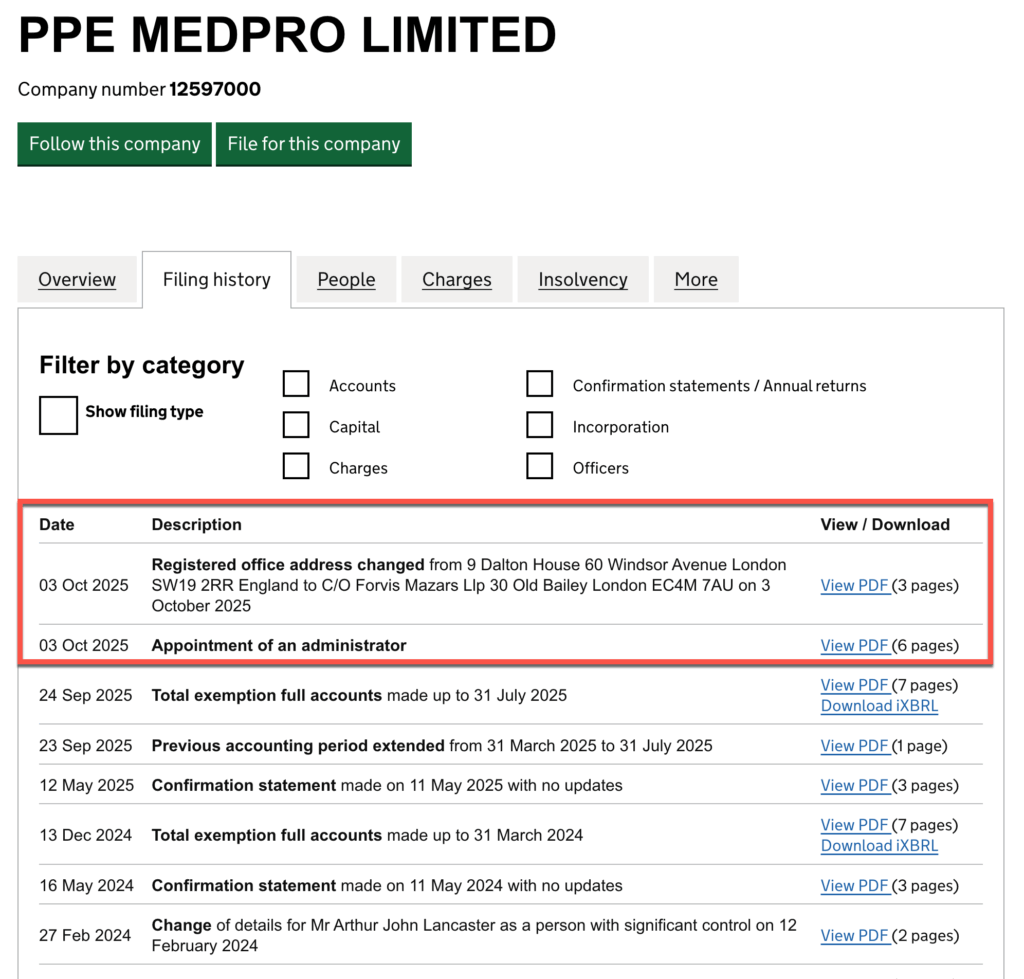
When a company goes into administration, a qualified insolvency practitioner is appointed as administrator to manage the business and resolve its outstanding debts. On Companies House, you will see the date the administrator was appointed.
What is the Difference Between Administration and Liquidation?
Administration is an insolvency process primarily aimed at rescuing or restructuring a business, often allowing it to continue trading under the control of an administrator.
In contrast, liquidation is the final winding-up of a business where its assets are sold and distributed to creditors by a liquidator, and the business ceases to trade. Unlike administration, creditors can still pursue actions against the company in liquidation.
What Causes Companies to Go Into Administration?
There will be two signs that a company may be on a path to administration:
- Cash flow problems: When a business doesn’t have ready money available to pay its debts on time. This is often temporary and can be resolved.
- Insolvency: When it can no longer pay its debts as they fall due or when its liabilities exceed its assets. At this point, the company may enter a formal insolvency procedure.
Once a company is insolvent, there are various procedures a company could go through:
- Company Voluntary Arrangement (CVAs): The company proposes a payment plan to creditors, typically spreading debts over 3-5 years. The company continues trading while making agreed payments.
- Company Administration: An insolvency practitioner (administrator) takes control of the company to do one of three things: rescue it as a going concern, achieve better results for creditors than immediate closure, or realize assets to pay secured creditors. The company continues trading during administration.
- Liquidation: The company is wound up, and its assets are sold to pay creditors. Liquidation can be compulsory (forced by creditors through court) or a creditors’ voluntary liquidation (directors initiate it when the company is insolvent). Once liquidation begins, the company stops trading, and you’ll need to submit proof of debt to claim any money owed.
No Cost. No Obligation.
100% Confidential.
How Company Administration Works
Once a company goes into administration, the administrator’s first task is to assess how viable the company is as a going concern. This includes evaluating all relevant aspects, such as:
- Turnover
- Profitability
- Debt burden
- Number of employees
- Contracts with suppliers and clients
- Market value
Once this stage has been completed, the administrator must form a plan for settling outstanding debts and bringing the company out of administration. This may involve any combination of:
- Restructuring
- Finding a buyer to invest
- Selling off assets or liquidation.
Some procedures, known as Pre-Packaged Administrations, see the sale of a company or its assets agreed upon before administration is entered, fast-tracking the whole process.
What Does the Administrator Do?
An administrator is a licensed insolvency practitioner appointed to take control of a company that has entered administration.
Their primary duties are to try to rescue the company as a going concern, or if that is not possible, to achieve a better outcome for creditors than immediate liquidation would produce.
They assess the company’s finances, manage its operations during the process, communicate with creditors, and either restructure the business, arrange a sale, or wind it down in an orderly way.
Why Do Companies Go Into Administration?
The most common causes are cash flow problems (where a business cannot pay its debts as they fall due) and insolvency (where liabilities exceed assets.)
Trading losses, over-reliance on a single large customer, rising costs, loss of a major contract, or accumulated debt can all contribute.
Administration is sometimes a planned step by directors who recognise the company cannot continue without restructuring, and sometimes it is triggered by creditor action such as a winding-up petition.
What Does Administration Mean for Creditors?
Administration is intended to strike a fair balance between the needs of struggling companies and creditors.
If a client who owes you money goes into administration, you will be notified by the administrator. The most immediate effect this will have is that any legal proceedings related to debt recovery efforts will cease, and you will not be able to launch more.
However, the administrator is obliged to achieve the best possible outcome for creditors. They will write to you within 8 weeks outlining their proposed course of action, whether this involves sale of assets, restructuring, sale, or closure.
They may also recommend entering a CVA and invite you to start negotiations.
As an unsecured creditor (which most trade creditors are), administration typically means:
- You cannot chase payment or issue a court claim while the moratorium is in place
- You will receive a formal notice from the administrator inviting you to submit a proof of debt, a formal claim for the money you are owed
- You are classified as an unsecured creditor, meaning you rank below the administrator’s fees, secured creditors (banks) and preferential creditors (employees) in the distribution of any recovered funds
- In many administrations, unsecured creditors receive little or nothing which is why acting quickly before administration is formally entered is critical
- If the company exits administration through a Company Voluntary Arrangement (CVA), you may receive partial payment over time
What you should do immediately:
- Submit your proof of debt to the administrator as soon as you receive notification
- Check whether any of the goods you supplied remain unpaid for and whether you have a retention of title clause in your contract (if so, you may be able to reclaim the goods directly)
- Contact Safe Collections for advice. In some cases, action taken before formal administration is entered can significantly improve your recovery prospects
Ultimately, there is no guarantee that you will be able to recover the full value of your debts from a company in administration. But this also applies to liquidation – if the value of a company’s assets does not match its debt burden, creditors will not get all of their money back.
The advantage of administration is that it looks at all available options before closure and puts a trained professional in charge whose job is to get the best deal possible for everyone.
Who Gets Paid First When a Company Goes Into Administration?
The administrators will use a set priority system when deciding who gets paid first:
- Secured creditors – banks and financial insitutions
- Administrator’s fees, to cover the cost of managing the administration process
- Ordinary preferential creditors – employees, who may be owed wages
- Secondary preferential creditors – HMRC (this page on the gov.uk website explains)
- Prescribed part creditors – ringfenced funds
- Secured creditors – simply put, banks, in some circumstances
- Unsecured creditors, also known as non-preferential creditors
- Shareholders
If your business is owed money, you are considered to be an unsecured creditor. This is why it can be difficult to get paid; you are lower priority than almost everyone else.
What Are the Warning Signs Your Client May Be Going Into Administration?
There are sometimes warning signs that a client might be on the edge of going into administration. Spotting problems early gives you time to protect your position.
We have a list of late payment red flags you can read.
In particular, look for:
Payment changes. When a client starts to miss payment deadlines and debts mount up, it is natural to start to wonder – do they have the means to pay? Look out for:
- Late payments or unpaid invoices
- Persistent payment problems and mounting debts
- Requests to vary payment terms, like extending deadlines asking to pay in installments
- Cheques bouncing or direct debits failing
- Only paying enough to keep the account just within credit terms
Communication changes. Clients with cash flow problems may become evasive, ignoring late payment letters and avoiding phone calls. You may notice:
- Key contacts becoming difficult to reach
- Vague explanations about payment delays
- Promises to pay that aren’t kept
- Finance director or other senior staff departing suddenly
Operational signs: A company that is heading into administration may begin to scale down its orders. Watch out for:
- Reduced order volumes or cancelling regular orders
- Requesting smaller deliveries than normal
- Staff redundancies or office closures
- Suppliers or contractors visibly stopping work at their premises
Company information: Keep an eye on the client’s business credit report and follow the company on Companies House.

You can also set up a Google Alert on the company name.
You should look for:
- County Court Judgments (CCJs) appearing on their credit file
- Overdue accounts filed at Companies House or accounts showing losses
- Changes in directors, particularly the appointment of turnaround specialists
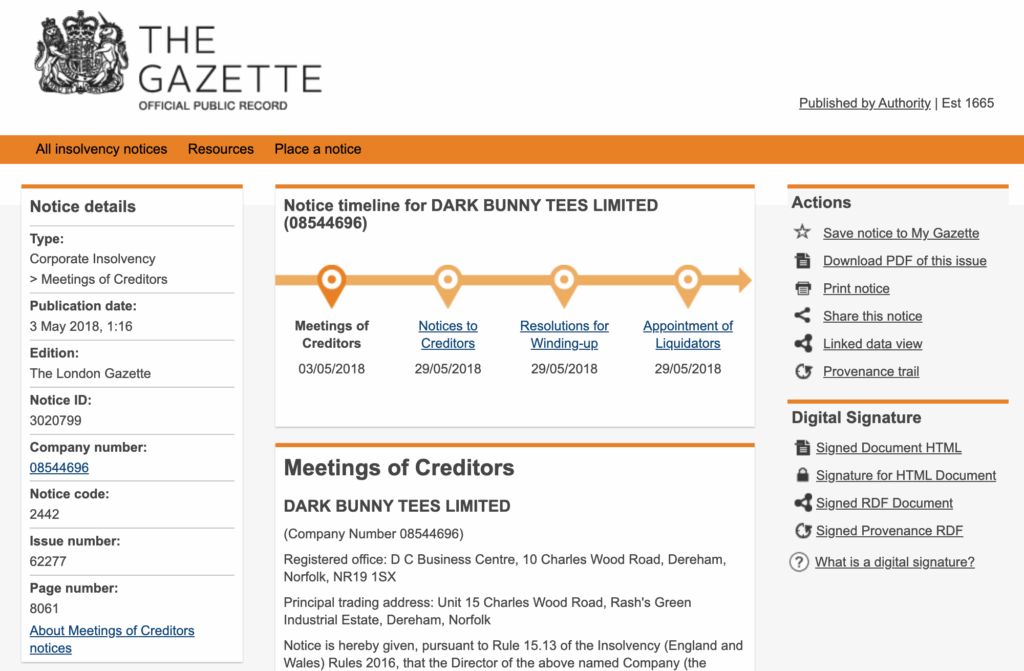
- Winding-up petitions published in The Gazette
What Should You Do If You Spot Signs of a Client Entering Administration?
If you find out that one of your clients is entering administration, reach out to a debt recovery agency as quickly as possible.
We understand insolvency procedures, know how to communicate effectively with administrators, and can often spot recovery opportunities you might miss.
Early advice – even just a conversation about your options – can make a significant difference to what you ultimately recover.
In the first 24-48 hours, you should also:
- Check what you’re owed – Gather your invoices, delivery notes, contracts, and correspondence. Calculate the exact amount you’re owed using our free late payment calculator.
- Stop supplying – Unless you are a supplier of essential supplies, that is to say a supplier of services specifically listed in sections 233 and 372 of the Insolvency Act 1986 you’re under no obligation to continue providing goods or services once administration begins. You should only continue if the administrator specifically requests it and agrees to pay further fees directly.
Managing some of these processes requires specialist knowledge. We can assess whether any alternative routes are worth pursuing in your specific situation.
Who Can Put a Business Into Administration?
There are three ways to put a business into administration:
- The company, or its directors, decide out of court to do so. The gov.uk website explains how to put your own company into administration.
- A floating charge holder (typically a bank or lender) decides to do so
- A creditor does so via a court order
Does a Company In Administration Still Owe Your Business Money?
Yes. The debt does not disappear when a company enters administration.
However, your ability to pursue it through normal legal channels is suspended for the duration of the administration process. You cannot issue a winding-up petition or take other recovery action while the administration moratorium is in place. Your recourse is to register as a creditor and work through the administrator.
Supplying a Company in Administration: Do You Have To?
No, you do not have to supply a company in administration unless you are a supplier of essential services. For most trade suppliers, you are under no obligation to continue providing goods or services once administration begins.
You should only continue if the administrator formally requests it and agrees in writing to pay for any further supplies directly.
If a company in administration owes me money, do I still owe them anything?
This is an area where you should take professional advice rather than acting unilaterally.
You should not simply offset what you owe against what you are owed without the administrator’s agreement. The administrator will contact you about any outstanding amounts owed to the company, and the correct approach is to engage with that process rather than withhold payment independently.
How Long Can a Company Be In Administration?
Administration initially lasts for 12 months, but this can be extended with the consent of creditors or by court order.
In practice, many administrations are resolved within the initial 12-month period, either through a sale of the business, a restructuring, or a move into liquidation. Complex cases involving large companies or contested claims can run longer.
Can a Company Survive Administration?
Yes. Administration is specifically designed to give a struggling company breathing space to restructure or find a buyer, rather than going straight to liquidation.
Some companies emerge from administration under new ownership or with a restructured debt burden and continue trading. Others are sold as a going concern through a pre-packaged administration, where a buyer is lined up before the process formally begins.
However, not all administrations result in survival. Some lead to liquidation if no viable rescue option exists.
What Happens After Company Administration Ends?
There are three possible outcomes:
- The company may be rescued as a going concern and return to normal trading, either under existing or new ownership.
- It may enter a Company Voluntary Arrangement (CVA), continuing to trade while repaying creditors under an agreed schedule.
- It may move into liquidation, where its remaining assets are sold and the proceeds distributed to creditors before the company is dissolved.
How to Find Out if a Company is in Administration
The most reliable method is to search for the company on Companies House, where the appointment of an administrator will be recorded.
You can also:
- Check The Gazette, the official public record, where notices of administration are published
- Check the company’s credit report
Setting up a Google Alert for the company name is a useful early warning tool.
If you are a creditor, the administrator is legally required to notify you directly once appointed.
What NOT to Do If You Spot Signs of a Client Entering Administration
If your client is entering administration, don’t expect quick answers from the administrator. Don’t offset debts or take back any goods.
Additionally, don’t rush into an agreement with a debt collection agency. Read our guide to the hidden risks in some no-win, no fee debt collection services.
Instead, contact Safe Collections immediately for a free review of your claim. Since 1984, we’ve been successfully collecting unpaid debts for businesses in the UK and have 10,000+ satisfied clients. We’re recommended by Crunch Accounting, IPSE, The Publishers Association, and the Halton Chamber of Commerce.
