
Most debts that can be recovered are resolved long before court action becomes necessary. For those that aren’t resolved, here’s what happens at each stage.
This guide covers UK debt collection. International debt recovery follows different processes and varies depending on the country involved.
Table of Contents
No Cost. No Obligation.
100% Confidential.
Step 1: Initial Contact and Demand
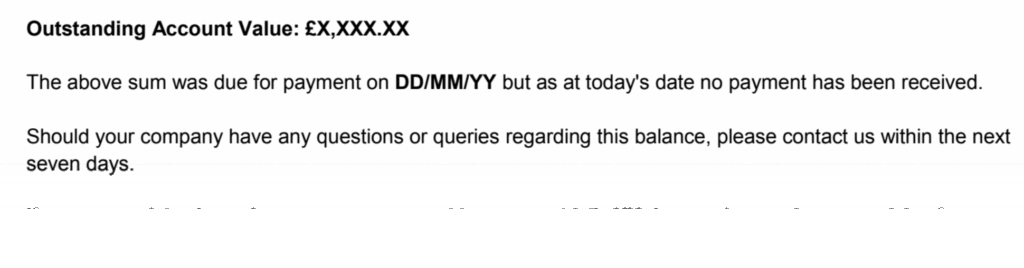
The process begins with a formal demand letter sent to the debtor, which you can create yourself using our free templates.
The letter sets out the amount owed, the original invoice details, a deadline for payment (typically 7-14 days), and a clear statement of what will happen if payment isn’t made.
At this stage, many debtors either pay immediately or make contact to discuss payment arrangements.
Step 2: Amicable Collection Activity
If the initial letter doesn’t produce payment, Safe Collections evaluates your case and begins collection activities.
This involves polite and professional phone contact, follow-up letters, and email communications aimed at securing payment or negotiating a realistic repayment plan.
If the debtor can’t be reached at known contact details, we may conduct debtor tracing to locate current addresses or updated contact information.
If a debtor is going to pay without legal pressure, this is when it will happen.
Step 3: Pre-Legal Assessment
If amicable collection doesn’t succeed, the next step is a decision point: is legal action worth pursuing?
We work with you to assess whether the debt is large enough to justify court costs, whether the debtor appears solvent, and whether the documentation is strong enough to support a claim.
Legal action requires the client’s approval and involves upfront costs, so a realistic cost-versus-recovery analysis is essential before proceeding.
If the case doesn’t meet the threshold for litigation, the options are either to continue amicable efforts.
Not every debt collection case reaches court, and not every judgment requires enforcement. The majority of cases resolve during the amicable stage, provided the debt is referred early and the debtor is solvent.
Step 4: Letter Before Action
If legal action is approved, the next step is a Letter Before Action (LBA). If the debtor raises a genuine dispute at this stage, the creditor must consider it before proceeding. If they ignore the letter or fail to pay, court proceedings can be issued.
Step 5: Issuing Court Proceedings
Court proceedings begin by filing a claim with the County Court. The creditor pays a court fee based on the claim value, and the claim is formally served on the debtor.
Once served, the debtor has a set period to respond — typically 28 days in most cases.
Step 6: Debtor’s Response Options
At this point, the debtor has four options:
- Pay in full. The claim ends.
- Admit the debt and request time to pay. The court may approve an installment arrangement.
- Defend the claim. If the debtor disputes the debt, the case may proceed to a hearing.
- Ignore the claim. If the debtor doesn’t respond, the creditor can apply for a default judgment.
Stage 7: Obtaining Judgment
If the debtor doesn’t respond, the court grants a default judgment in favour of the creditor. If the debtor admits the debt but can’t pay immediately, the court may issue a judgment with a payment plan or allow the parties to agree a Tomlin Order. If the debtor defends, the case may proceed to a hearing where both sides present evidence and the judge decides the outcome.
Once judgment is obtained, a County Court Judgment (CCJ) is registered against the debtor, which affects their credit rating and ability to borrow.
Stage 8: Post-Judgment Enforcement
A judgment doesn’t guarantee payment. If the debtor still doesn’t pay, enforcement action is required — and this is where additional costs come in.
Enforcement options include:
- High Court Writ of Control — instructing High Court Enforcement Agents (bailiffs) to seize and sell the debtor’s assets.
- Attachment of Earnings Order — deducting payments directly from the debtor’s wages (if they’re employed).
- Third Party Debt Order — freezing funds in the debtor’s or another parties bank account.
- Charging Order — placing a charge against the debtor’s property, recoverable when the property is sold.
- Bankruptcy or winding-up petition — forcing the debtor into insolvency proceedings (a last resort for larger debts).
Which method is appropriate depends on the debtor’s circumstances and what assets or income they have. Enforcement costs are the creditor’s responsibility, so it’s important to choose the method most likely to succeed.
Stage 9: When Enforcement Fails
In some cases, enforcement doesn’t succeed because the debtor genuinely has no assets or income. At that point, the options are to write off the debt, keep the judgment active in case the debtor’s circumstances improve, or close the file.
Judgments remain valid for six years, so a debtor who can’t pay now may be in a position to pay in the future.
Need Help with Debt Collection in the UK?
Safe Collections specialises in UK B2B debt recovery with no upfront fees and no long-term contracts. We handle everything from initial contact through to court enforcement, and we’ll give you honest advice at every stage about whether legal action makes sense for your case.
Contact us today for a free case assessment.
